
- Index
- Brand
- Audemars Piguet (5)
- Berkey (19)
- Best Of Show (4)
- Charterwells (150)
- Clogau (15)
- Crown (4)
- Crown Derby (4)
- Crown Royal (37)
- Dolce & Gabbana (11)
- Handmade (33)
- Ignition Model (4)
- Imperial (4)
- Juicy Couture (4)
- Mopar (13)
- Nba (5)
- Rae Dunn (7)
- Royal Crown (55)
- Royal Crown Derby (2609)
- Same (6)
- Trimming Shop (4)
- ... (1661)
- Finish
- Item Height
- Material
- Alloy / Metal (5)
- Bone China (1021)
- Bronze (4)
- Cast Iron (3)
- Ceramic (116)
- China (3)
- Crystal (3)
- Cubic Zirconia (3)
- Default (45)
- Enamel (3)
- Fine Bone China (13)
- Gemstone (4)
- Gold (3)
- Metal (32)
- Metal, Stone (4)
- Porcelain (479)
- Porcelain / China (786)
- Real Glass Neon (3)
- Resin (8)
- Silk (3)
- ... (2113)
- Theme
- Type
- Bowl (22)
- Cake Stand (30)
- Candlestick (21)
- Dining / Decoration (30)
- Dinner Plate (56)
- Figurine (70)
- Mug (35)
- Paperweight (1188)
- Plate (42)
- Ring (28)
- Salad Plate (71)
- Sculptural Figurine (20)
- Side Plate (25)
- Soup Bowl (21)
- Sports Trading Card (115)
- Sugar Bowl (21)
- Tea Cup & Saucer (27)
- Tea Pot (21)
- Teapot (30)
- Vase (28)
- ... (2753)
Royal Crown Derby Paperweight. Camel. MAGNIFICENT! Gold Stopper
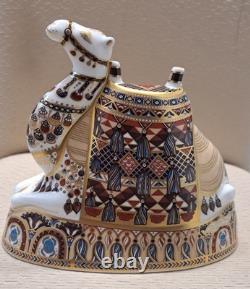
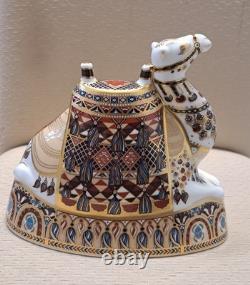
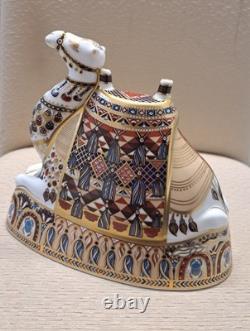
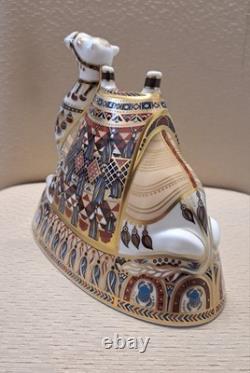
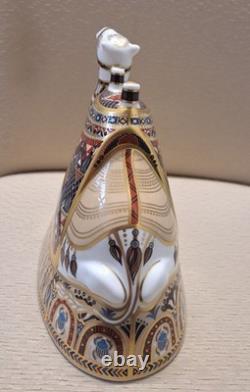
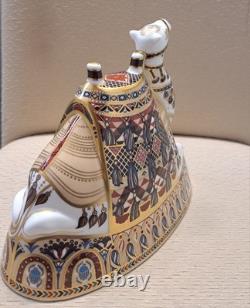
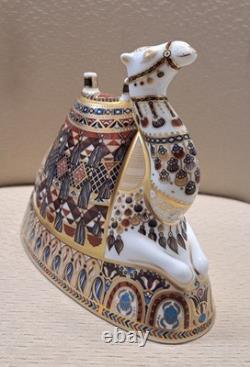
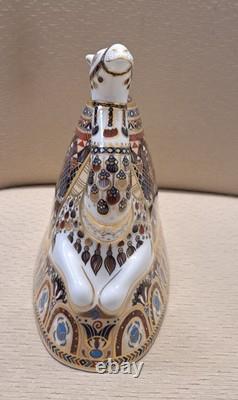
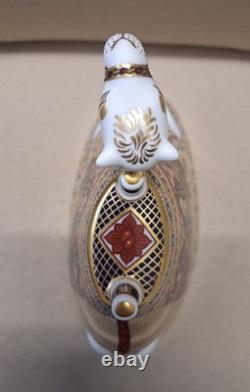
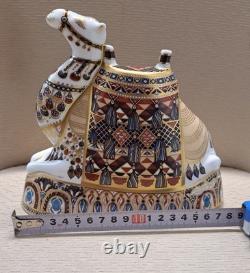
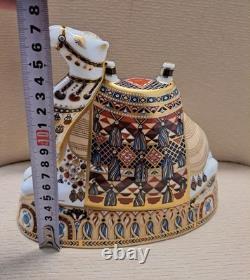
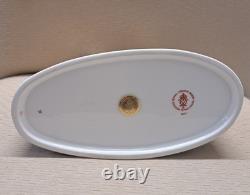


Royal Crown Derby Paperweight Camel. Please contact me via my listing if there's anything you'd like to discuss. A truly magnificent recumbent piece measuring 17.5cms high by 17cms long. Multiple rich and complex colours on a slightly grey background.
Lavishly adorned with 22-carat gold gilding. We see the "mahawi" or Camel saddle supported by a pair of wool or canvas pads on each side of the hump leveling out the back's contours. The "mahawi" played a crucial role in the spread of Islamic culture, scholarship and technology and goods across the Sahara. The "mahawi" has no stirrups for riding as it is used principally for goods transportation.
Under the "mahawi", we see the square piece of material called a "numnah". Draped under the "numnah", we see the "al-shamalah", a tightly woven piece of cloth. Camel bags are called "ballouch", and vary in size being of a simple pouch design. The patterns represent myriad concepts and are much desired.
The numerous tassels or trappings called "shar sheeba" can be made of wool, silk, and cotton with stones, feathers or beads added and can represent different tribes. The blue scarab beetles around the base represent perseverance in the face of adversity amoungst other things, which is exactly what a Camel does in any of the arid areas comprising its habitat. Introduced in 1996 and retired in July 2008.Modelled and decorated by John Ablitt. Draped around the sides of the "mahawi" are the bags.